Generating and Transmitting an Analog TV Signal
To provide an OTA signal, I use a digital TV tuner converter box to convert an OTA digital TV DTV signal to analog composite video and audio and an audio-video modulator to transmit the analog composite video and audio on a VHF TV channel. Any other analog composite video and audio source material can be used, but a converted OTA DTV signal provides a readily available source for quick test and demonstration.
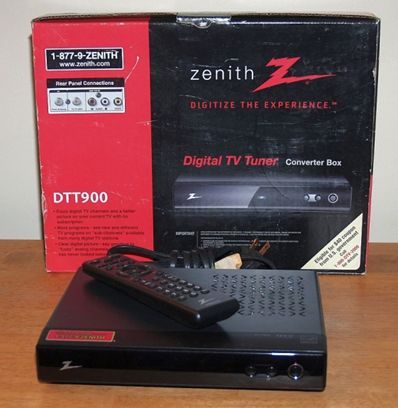
The digital TV tuner converter box I use is a Zenith Model DTT90 shown below. This device was sold during the transition of US television stations from analog to digital. This device enabled television audiences to continue to have access to television programming if they had not yet purchased a digitial television receiver.
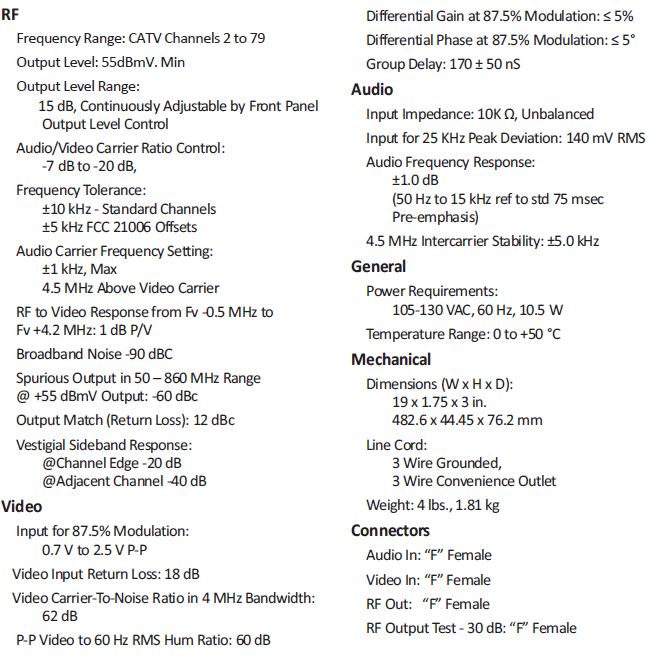
The audio-video modulator I use is a Blonder Tongue BAVM-860SAW shown below. My AV modulator operates on Channel 12. There is no television station operating on this channel in my area, so no interference will be experienced. This device was typically used for analog CATV (cable) applications. It has an output power level of +55 dBmV, minimum, that provides a strong signal for my vintage televisions in the vicinity.

Below are the specifications for the Blonder Tongue BAVM-860SAW AV modulator.
I made a dipole antenna tuned to the transmitting channel (Channel 12). The AV modulator and antenna provide a good signal within a large area. My antenna is shown below.

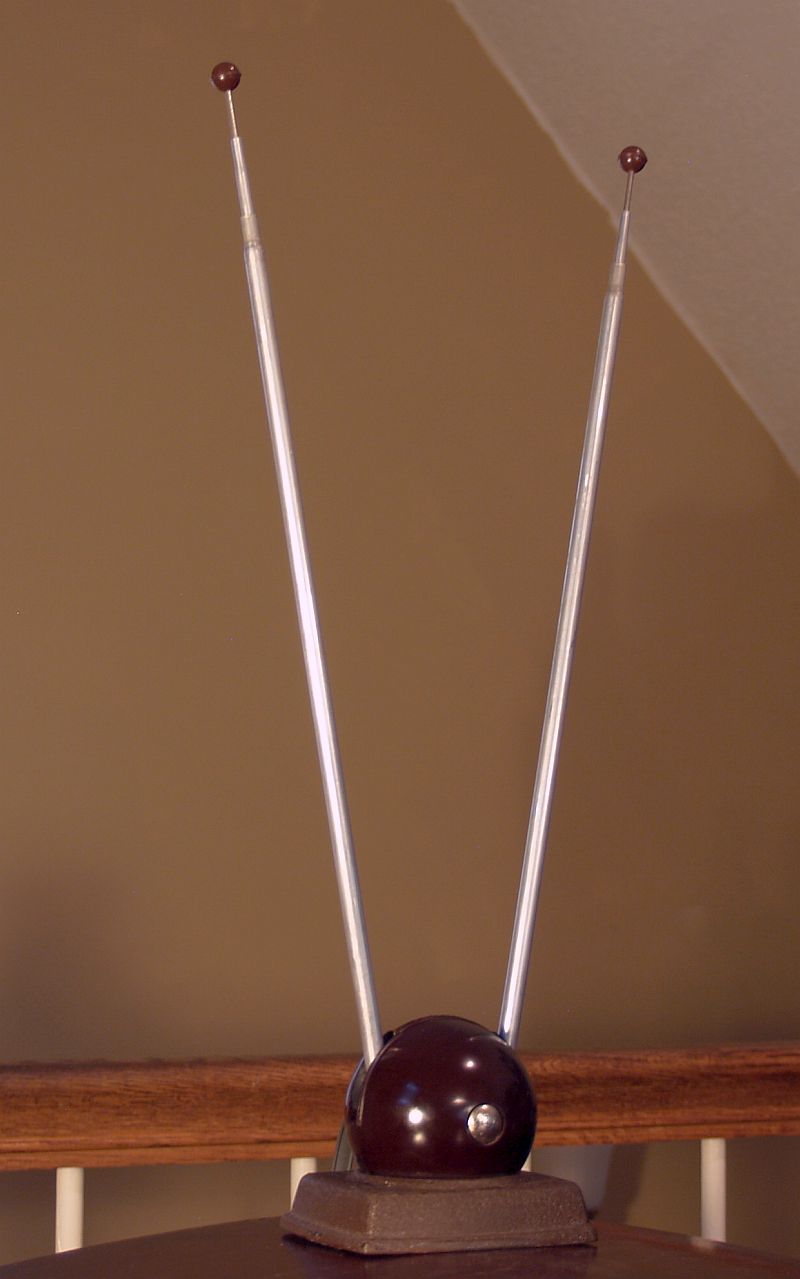
For receiving the signal, I use vintage "rabbit ears" antennas shown below connected to my vintage televisions.