 |
 |
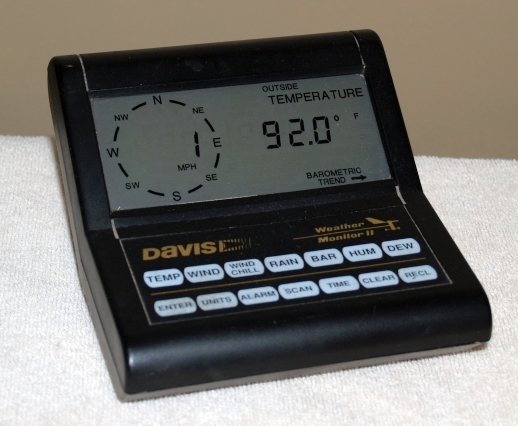
I have a Davis Instruments Weather Monitor II weather station. I purchased this unit used in February 2009. The original owner was selling this unit because he wanted a wireless unit. This station measures:
Wind Direction
Wind Speed
Outside and Inside Temperature
Outside and Inside Humidity
Barometric Pressure
Dew Point
Inside and Outside Humidity
Wind Chill
Rainfall
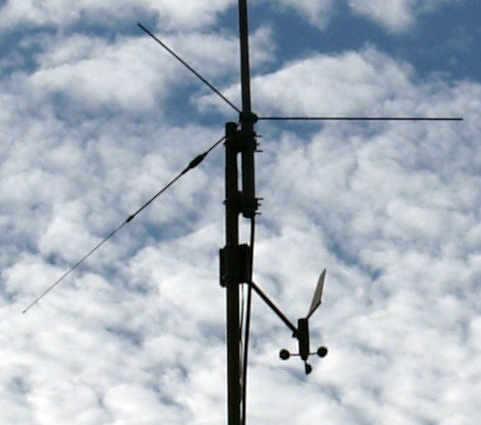
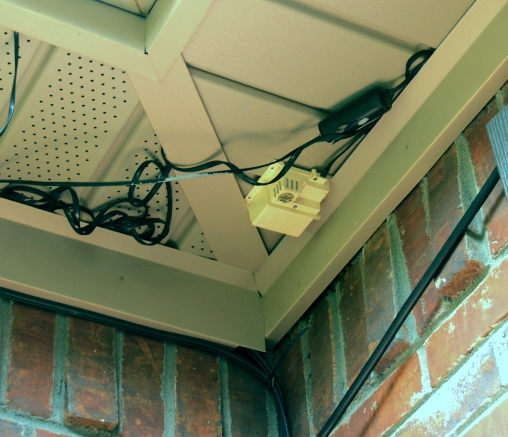
I mounted the wind vane and anemometer on an antenn mast mounted to the side of the second story portion of my house shown below. The rain collector was mounted on the lower edge of the eve on the front of the house as shown below. The outside humidity sensor is mounted under the roof overhang out of direct sunlight and moisture. This arrangement works well.
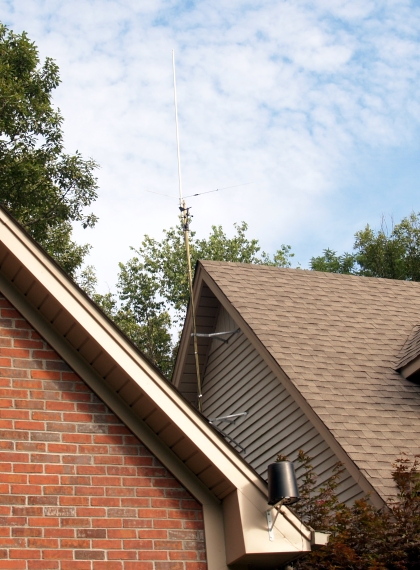
The picture below shows a closeup of the anemometer mounting.


The picture below shows the temperature and humidity sensor mounted under the roof overhang.
The Davis No.7859 External Temperature/Humidity Sensor is known to fail after many years of exposure to the elements. In particular, the humidity sensor fails and reports either very low or very high humidity. After approximately 12 years, my humidity sensor reports either very low or very high humidity. I did purchase my Davis system used and as such, the sensor was likely exposed to the elements much longer than 12 years. Thi sensor is no longer available as a new or refurbished item.
Below is a picture of the 7859 External Temperature/Humidity Sensor mounted under the roof overhang of my house. This installation is different from where I originally installed it.
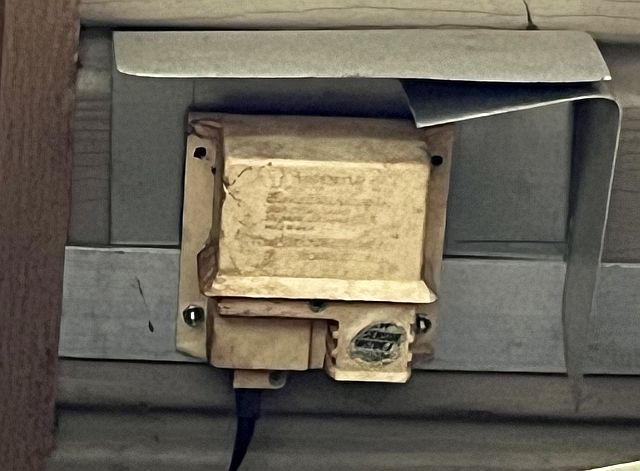
Note how discolored the sensor is. I installed aluminum shields around it to ensure rain did not directly hit it.
In March 2023, I found on eBay for a low price, a Davis Weather Monitor II for sale that had everything except the rain gauge. I took a chance that the 7859 External Temperature/Humidity Sensor would be functional and as it turned out, the sensor was functional, including the humidity sensor. I decided to mount the Davis No.7859 External Temperature/Humidity Sensor inside a solar shield for protection.
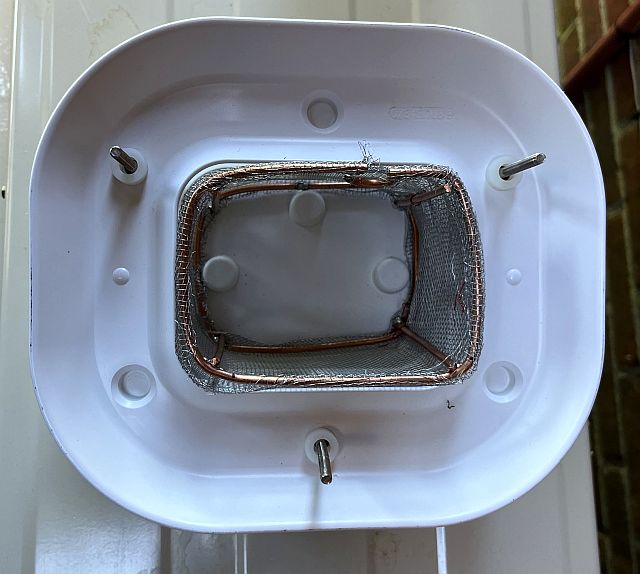
I acqiured an Onset RS1 Solar Radiation Shield for a reasonable price and modified it to accept the 7859 External Temperature/Humidity Sensor. The shield is designed for the Hobo data loggers and I had to separate the three open plates each by an additional 1/4 inch using nylon spacers to provide sufficient vertical height for the sensor. In addition, I fabricated a screen cage to surround the sensor so that wasps would not get inside and build a nest. The picture below shows the screen cage inside the solar shield ready for the sensor to be placed inside.
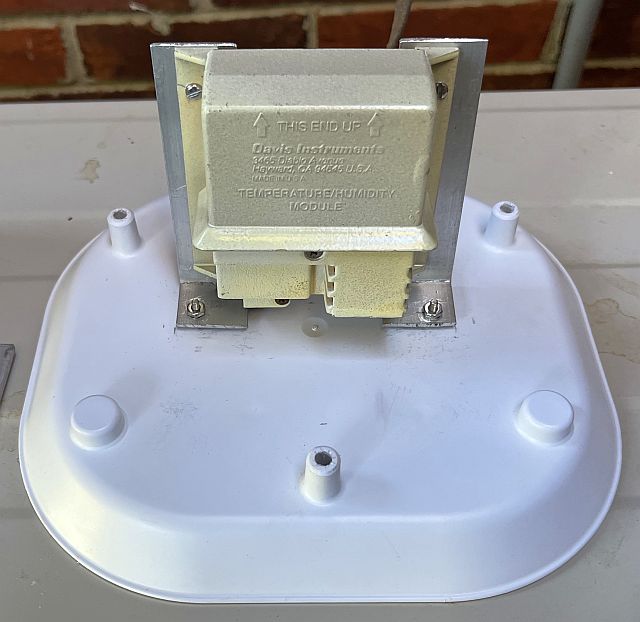
The picture below shows the new Davis No.7859 External Temperature/Humidity Sensor mounted on the solar shield bottom plate ready to be assembled to the remainder of the modified solar shield.
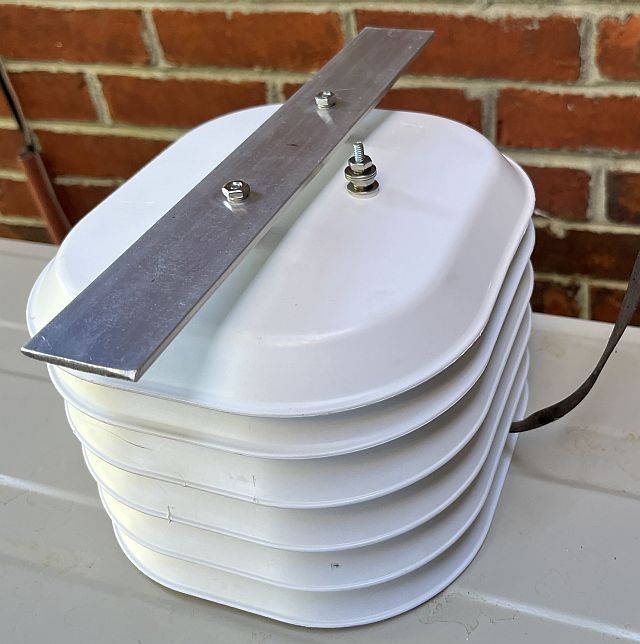
The picture below shows the completed sensor/shield assembly ready to mounted under the roof overhang.
Below is a picture of the sensor/shield assembly mounted under the roof overhang.

In 2012, I purchased the Davis Weatherlink #7862 data logger and software for my Weather Monitor II. I have the software running on a Zotac Zbox mini-PC using the Windows 7 operating system. The Zbox has only USB ports so I am using a USConverters Model S880 USB-to-serial port adapter. Using a good USB-to-serial adapter is critical to proper operation because the continuous communication between the Weatherlink software and the data logger will occasionally lock up the computer if the serial port emulation is not implemented well. I found this out the hard way by initially using less expensive adapters. With this setup, I have experienced no problems with the Zbox and Weatherlink software running continuously.
The Zbox with the USConverters device is shown in the picture below.
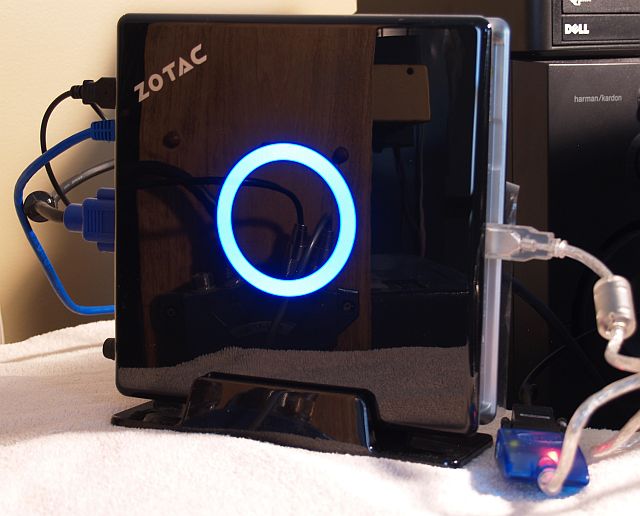
The Zbox uses an Intel Atom processor and requires little power. In addition to using little power, it is much more quiet than using a regular personal computer. The Zbox is physically quite small measuring approximately 10 inches across the diagonal and about 1.5 inches thick. The Zbox I purchased is a "barebones" system so I had to purchase an SD-DIMM DDR3 2GB memory card and a solid state hard drive in addition to the Windows 7 operating system.
I have the Zbox "brick" power supply connected to an APC 200W Uninterruptable Power Supply (UPS) so the Zbox will not have to reboot after a power failure. The UPS also has surge protection to further protect the Zbox from power surges.
The Weatherlink computer display is shown below.

This setup works well and uploads weather data to my home page every 15 minutes. I also have a detailed weather page where I upload additional weather data, 24-hour accumulated weather data, and our regional NWS weather radar. You can access this page by clicking here.